


For outdoor brands, kayak distributors, rental operators and water sports retailers, choosing an inflatable kayak is no longer simply about selecting a color, size or price.
Kayak construction has become an important part of product positioning. One category receiving increasing attention from B2B buyers is the full drop stitch inflatable kayak.
Compared with more conventional inflatable kayak designs, a full drop stitch concept uses drop stitch construction across more of the kayak structure, helping create a different shape, feel and market position.
For buyers planning an OEM or private label project, the important question is not whether full drop stitch is automatically “better.” The real question is whether it is the right structure for the target customer and sales market.
Drop stitch construction uses internal threads connecting opposite fabric surfaces so the inflatable structure can maintain a controlled shape when inflated.
Many inflatable water products already use drop stitch construction in selected areas, especially floors.
A full drop stitch kayak extends this construction concept further into the kayak body, creating a product that can have a more defined and structured appearance than traditional tube-style inflatable designs.
For B2B buyers, this difference matters because construction influences more than product performance.
It also influences:
Product appearance
Market positioning
Packaging strategy
Customer expectations
Retail presentation
Selling price positioning
This is why buyers should understand the target customer before selecting the structure.
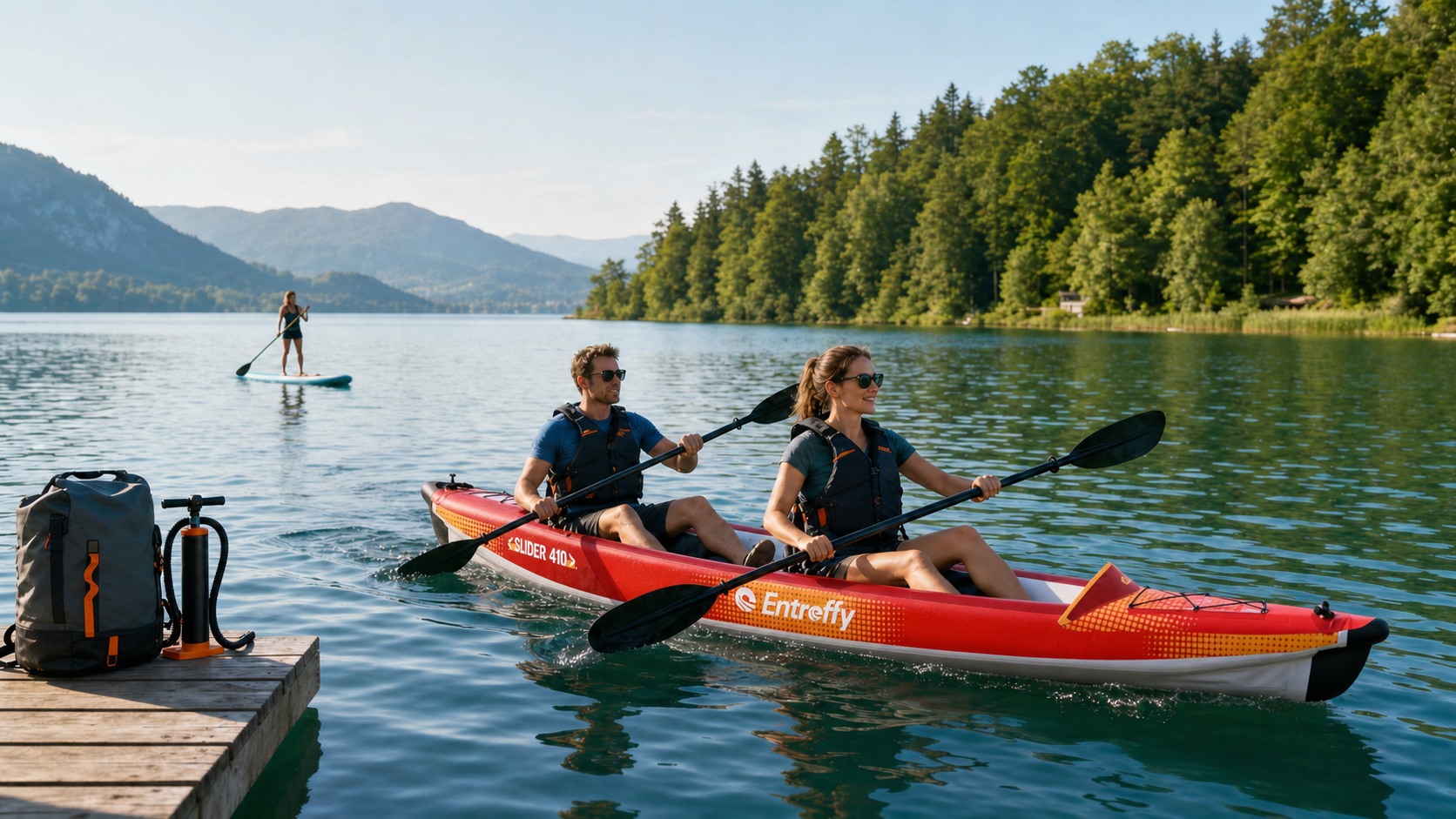
There is no universal answer.
A traditional inflatable kayak may be appropriate for buyers targeting casual recreation, entry-level users or markets where simplicity and familiar inflatable construction are important.
A full drop stitch inflatable kayak may be more suitable for brands wanting a more structured appearance and a product positioned differently from basic recreational inflatable models.
The choice should depend on questions such as:
Who is the customer?
How will the kayak be marketed?
Will the product be sold by an outdoor brand, specialist kayak retailer, distributor or rental business?
What type of user experience does the buyer want to communicate?
What price position does the brand want to occupy?
B2B buyers should answer these questions before deciding which construction direction to develop.
Before contacting a drop stitch kayak manufacturer, buyers should define the commercial purpose of the product.
Important information includes:
Target market
Target customer
Intended use
Single or tandem positioning
Preferred visual style
Branding requirements
Sales channel
Expected quantity
Packaging expectations
The clearer the buyer's product concept is, the easier it becomes to discuss a practical development direction.
A common mistake is to begin by asking only for the lowest quotation.
Price matters, but it should be evaluated together with the product concept and target market.
A lower-cost configuration is not necessarily the better choice if it does not fit the customers the brand wants to reach.
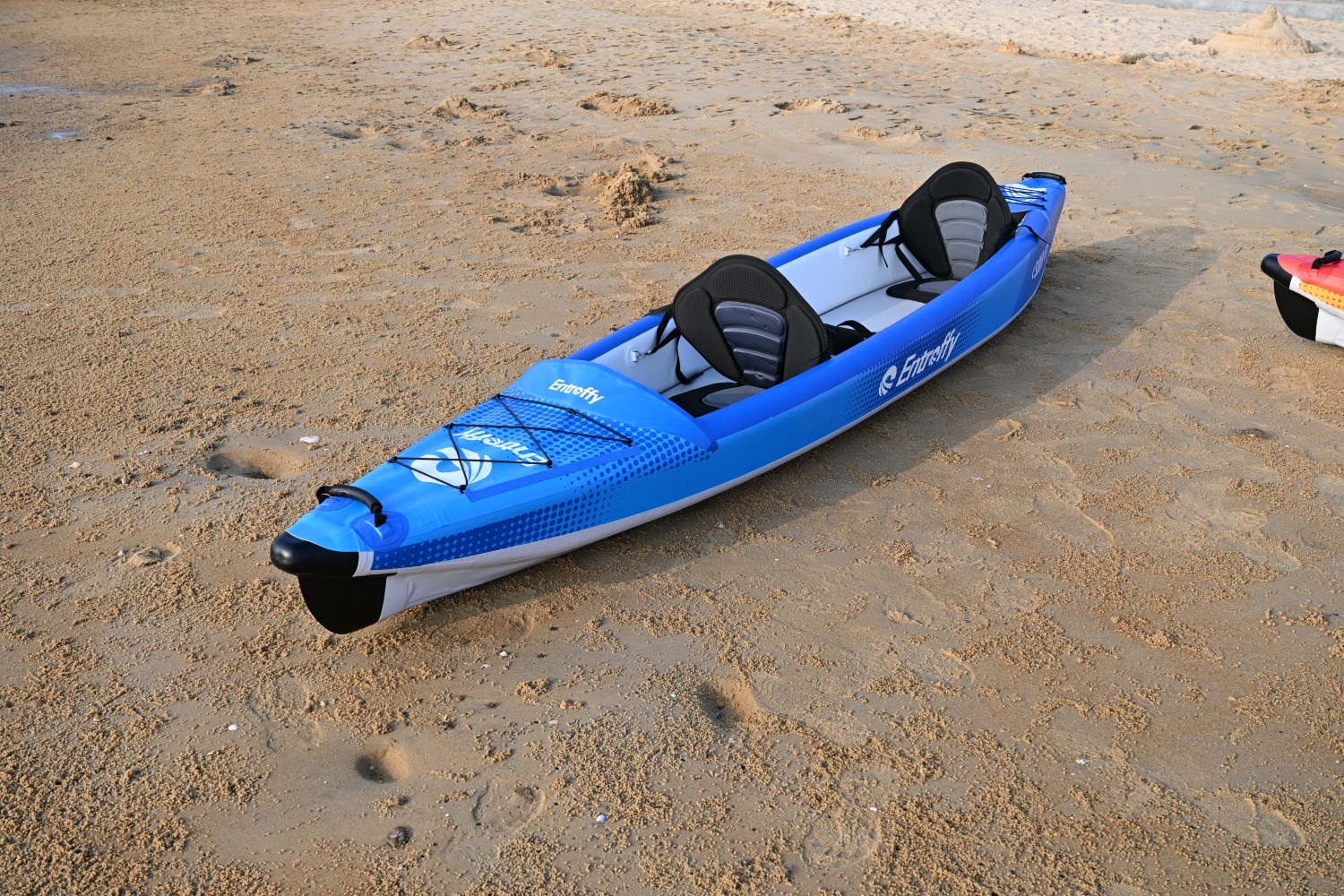
Construction is only one part of the product.
The overall layout also affects how customers experience and understand the kayak.
Depending on the intended market, buyers may need to consider:
Seating arrangement
Usable interior space
Storage areas
Carrying handles
Deck organization
Attachment positions
Visual graphics
Accessory combinations
Not every project needs the maximum number of features.
For a recreational model, a simple and understandable layout may be more valuable.
For a more specialized product, buyers may want additional functional areas or a different accessory package.
The goal should always be to make the layout match the target user.
One reason buyers search for a custom inflatable kayak instead of a generic model is product differentiation.
Customization can include:
Color combinations
Graphics
Logo placement
Deck styling
Seat configuration
Attachment layout
Packaging
Accessory combinations
For private label brands, these details help create a product that customers can recognize.
Functional differentiation is also important.
Two kayaks may look similar from a distance but serve different markets because their seating, storage, accessory strategy or overall positioning is different.
This is particularly valuable in mature inflatable kayak markets where many generic products compete heavily on price.
An inflatable kayak manufacturer should provide more than a catalogue and quotation when working on an OEM project.
B2B buyers should evaluate whether the supplier understands:
Product positioning
Target customers
Application requirements
Branding direction
Customization priorities
Packaging needs
Future product development
Communication is especially important when developing a product that differs from a standard catalogue model.
A capable supplier should ask questions about how the kayak will be sold and used instead of treating every project as the same product with a different logo.
For long-term cooperation, product development support can be as important as the initial quotation.
It can be an attractive direction when the structure matches the buyer's market and business model.
Outdoor brands may use full drop stitch construction to create a more differentiated kayak category.
Specialist retailers may use it to provide customers with an alternative to traditional inflatable kayak structures.
Rental operators may also evaluate it according to their own requirements for customer experience, handling and product positioning.
The important point is to evaluate the complete business case rather than selecting the structure because it is currently popular.
OEM and private label development can be discussed according to the buyer's product concept, branding requirements, target market and intended configuration.
Buyers should ideally provide their target market, intended use, preferred style, expected quantity, branding requirements and any specific product ideas.
Not necessarily. The best construction depends on the target user, market positioning, sales channel and product concept.
A product range can use different constructions to serve different customer groups, provided each model has a clear market position.
If your company is planning a full drop stitch inflatable kayak, private label kayak or OEM kayak project, feel free to send us your target market, preferred design, branding ideas, expected quantity and project requirements.
We can discuss a suitable development direction based on your business needs and explore an inflatable kayak solution that better fits your market.
Address 732 households, No. 55 Feixian Road, Shinan District, Qingdao City, Shandong Province
E-mail zachary@wassersporte.com

