


A kayak changes when fishing becomes the main activity.
For recreational paddling, the journey itself is often the experience. The user gets on the water, paddles, explores and returns.
Fishing creates a different rhythm.
More equipment comes aboard. The paddler may remain in one area for longer periods. Storage becomes more important. Small accessories suddenly need logical positions. The seat, deck and usable interior space begin to matter in a different way.
That is why an inflatable fishing kayak deserves to be treated as more than a standard kayak with a fishing graphic.
It can become a purpose-built platform for a completely different kind of day on the water.
There is no single feature that instantly turns a recreational kayak into a fishing model.
The difference comes from the overall product concept.
A fishing-oriented kayak may place more attention on usable space, equipment organization, seating, storage and attachment areas.
More importantly, those elements need to work together.
Adding several accessories to a recreational kayak does not automatically create a convincing fishing product.
The kayak should feel like fishing was considered from the beginning.
That difference can be visible even before the product enters the water.
A clean, organized interior often communicates the intended purpose much more clearly than a long feature list.
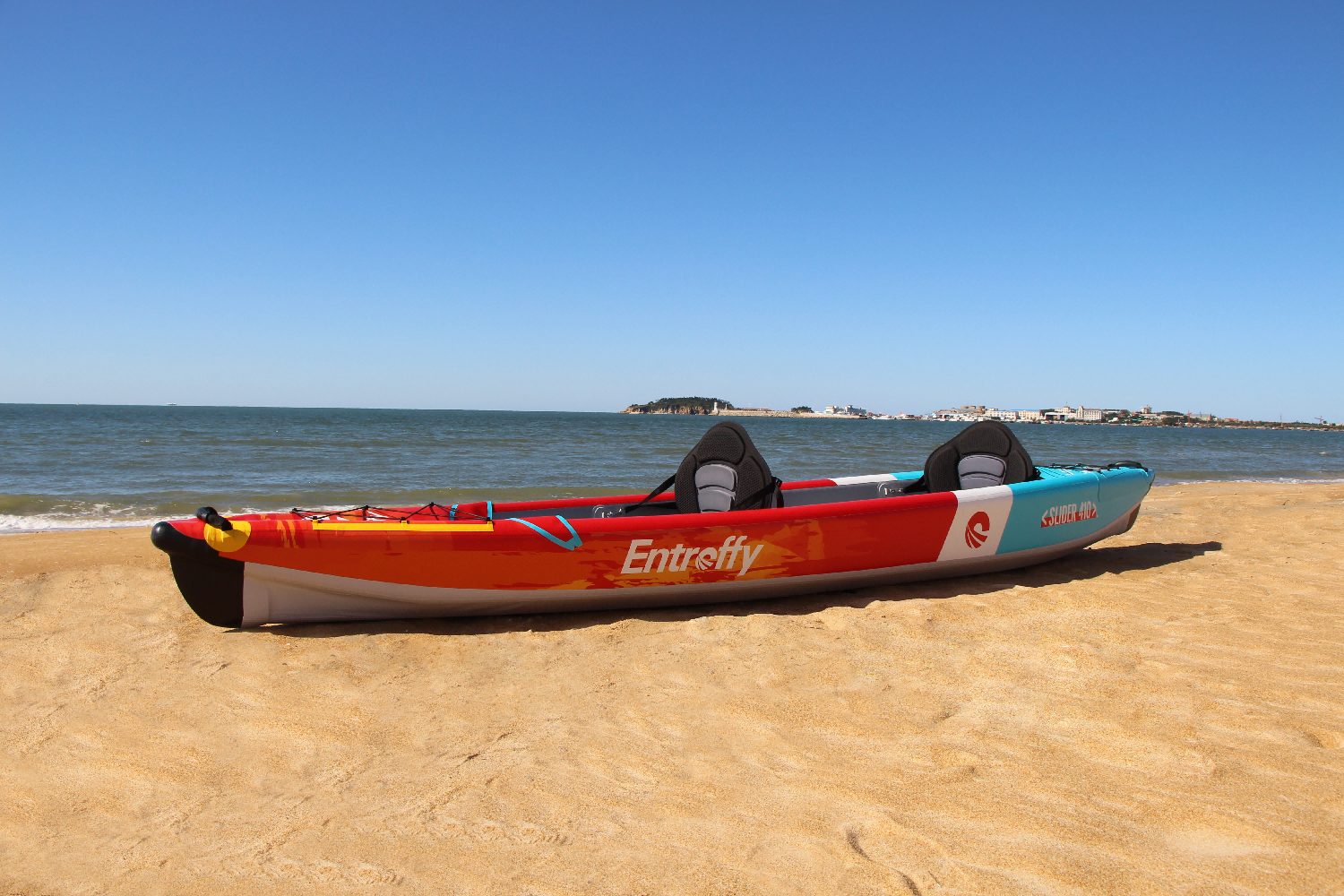
Fishing equipment changes the way a paddler uses the kayak.
A normal recreational user may carry only a few personal items.
An angler may bring tackle, dry bags, tools, food, safety equipment and other gear depending on the type of trip.
That makes space management important.
The goal is not simply to create the largest possible interior.
A useful fishing layout gives different items a logical place while keeping the kayak comfortable to enter, paddle and use.
Open space can sometimes be just as valuable as additional attachment points.
If every available area is filled with fittings and accessories, the kayak can quickly become visually and practically crowded.
Good fishing design often comes from deciding what does not need to be added.
A fishing kayak deck has to support more activities than paddling alone.
The user may need to reach equipment, adjust tackle, change position or access stored items without constantly reorganizing everything around them.
That brings several areas into focus:
Seat position
Usable interior space
Storage zones
Carrying handles
Attachment areas
Accessory locations
Branding and graphics
The relationship between these areas matters more than the number of features.
For example, an attachment point may look useful in a product photo but become inconvenient if it occupies an area the user regularly needs.
A better layout begins with the activity itself.
Not every fishing kayak needs to be designed for the same angler.
Some users simply want to take fishing equipment on relaxed lake trips.
Others spend longer periods on the water and may expect a more specialized setup.
That creates room for different product positions.
A recreational fishing kayak can remain simple and approachable.
A more specialized model may place greater emphasis on equipment organization and dedicated accessory areas.
Both can belong to the same fishing category while serving very different customers.
This is important for brands because it allows a fishing kayak line to develop beyond a single model.
Fishing sits naturally between two established markets: paddlesports and outdoor recreation.
That makes the category interesting for companies that already sell kayaks, SUP boards, camping products or fishing equipment.
A fishing kayak can connect these audiences without becoming a completely unrelated product.
For a paddle sports brand, it creates a more specialized kayak option.
For an outdoor retailer, it adds another activity-driven product category.
For a fishing-oriented business, it offers another way for customers to access the water.
This overlap can also make the product easier to place within a wider outdoor collection.

Fishing products do not all need to look the same.
Dark outdoor colors, camouflage-inspired graphics and technical styling are common, but they are not the only options.
A fishing kayak can also use a cleaner recreational look, a premium outdoor identity or a more lifestyle-oriented design.
What matters is consistency.
Graphics, color, seat styling, deck organization and accessories should feel like they belong to the same product concept.
For a custom inflatable fishing kayak, this is where OEM development can create real value.
Instead of simply placing a logo on a standard kayak, the product can be visually connected to the brand's wider range.
One reason inflatable kayaks are interesting in the fishing market is the different ownership experience they can offer compared with larger rigid watercraft.
Storage and transportation are part of that story.
For some customers, fishing access is limited not by interest but by the difficulty of transporting and storing equipment.
An inflatable format can create another route into the activity.
That does not mean every customer will prefer an inflatable kayak.
It means the category serves people who value a different balance between water access, storage and recreational use.
This can give brands another clear position alongside rigid or more traditional fishing craft.
A kayak collection becomes easier to understand when each model has a reason to exist.
For example:
A recreational kayak can focus on casual paddling.
A tandem kayak can focus on shared use.
A touring kayak can focus on longer journeys.
A full drop stitch model can highlight a different structural experience.
A fishing kayak can focus on equipment, organization and time spent fishing.
These categories can overlap, but they should not feel identical.
Clear product roles help customers understand the range without relying entirely on technical specifications.

Once the fishing concept is clear, development becomes much more focused.
Useful project information may include:
Intended fishing environment
Recreational or more specialized positioning
Single or tandem concept
Preferred seat arrangement
Storage expectations
Accessory ideas
Visual direction
Branding
Expected quantity
Sales channel
Packaging requirements
This creates a stronger starting point than simply asking for “a fishing version” of an existing kayak.
Many recreational kayaks may be used for different activities, but a dedicated fishing model is usually positioned around the specific space, organization and equipment needs of anglers.
Not necessarily. Accessories are useful when they support the intended activity. A simple, well-organized layout can be more practical than adding unnecessary fittings.
OEM and private label projects can be discussed around colors, graphics, seating, storage areas, attachment positions, accessories, packaging and the intended market.
Potential markets include outdoor brands, kayak retailers, fishing equipment businesses, distributors, rental operators and other water sports companies.
If you are developing an inflatable fishing kayak, private label kayak or broader paddlesports collection, send us your product direction, target market, branding ideas, expected quantity and project requirements.
We can discuss how a fishing kayak could fit into your product range and explore a suitable OEM development direction.
Address 732 households, No. 55 Feixian Road, Shinan District, Qingdao City, Shandong Province
E-mail zachary@wassersporte.com

