


Stand-up paddle boarding is often pictured as a solo activity, but not every day on the water needs to be spent alone.
A 2 person inflatable SUP, often described as a tandem paddle board, creates a different kind of experience. Instead of focusing only on one paddler, it gives couples, families and friends a larger shared platform for recreational paddling and outdoor time together.
That difference is important for product development as well. A tandem SUP is not simply a standard inflatable paddle board made longer. Its purpose, layout and market position are different enough to justify treating it as a separate product category.

Most paddle board collections are built around single-rider models.
They are familiar, easy to understand and suitable for a wide recreational audience. But once a market becomes crowded with similar all-round boards, brands often need new product ideas that create a noticeably different experience.
A tandem SUP does exactly that.
Instead of asking customers to choose between another color or graphic, it changes how the board can be used.
Two people can paddle together. Parents can share the experience with children. Couples can turn a normal SUP session into a shared outdoor activity. Resorts and water sports operators can also use tandem models to offer something different from standard single-person rentals.
The product story becomes much clearer because the difference is visible before the customer even gets on the water.
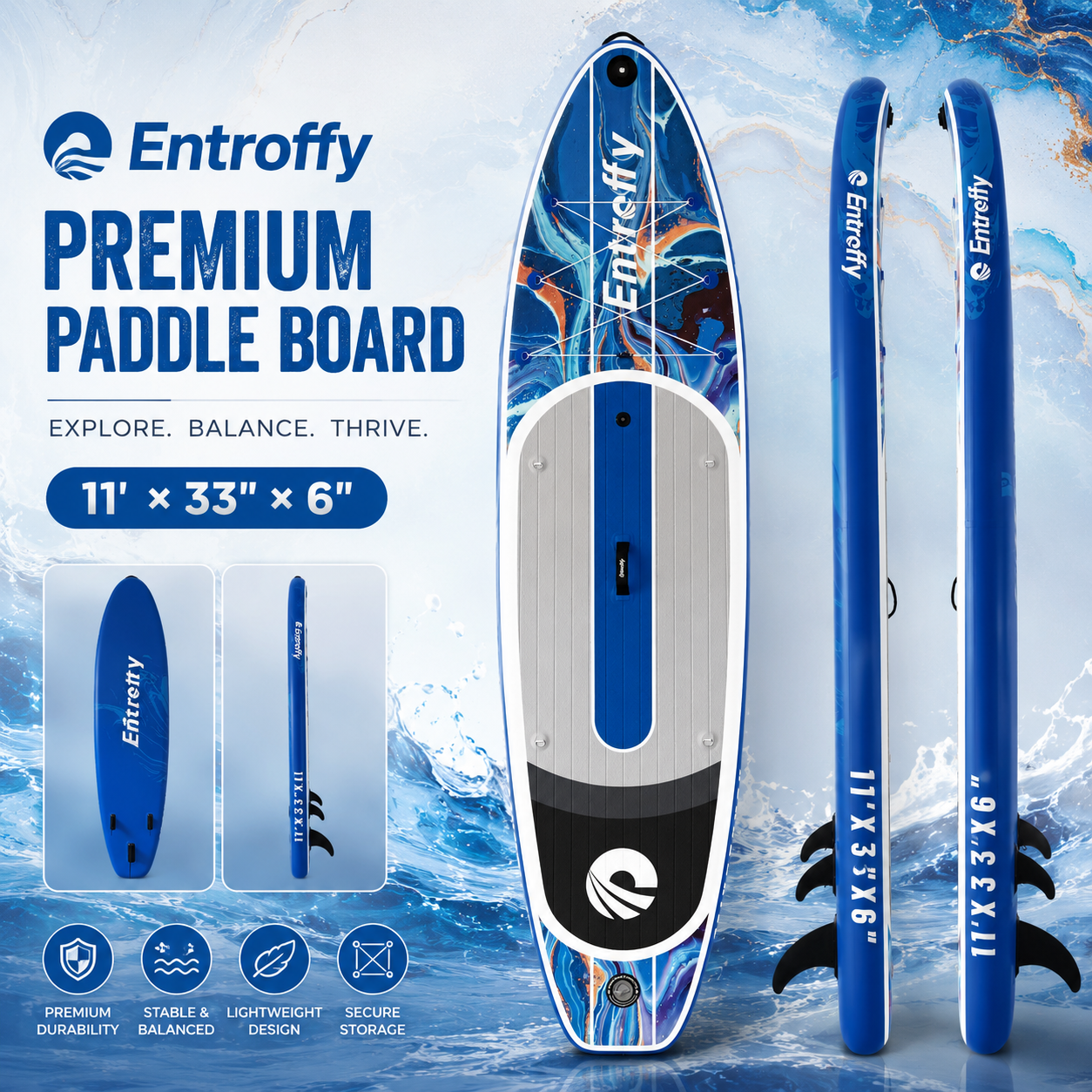
A tandem SUP can appeal to several types of users, but the strongest product concepts usually focus on one or two clear situations.
Couples may value the ability to paddle together instead of taking two separate boards.
Families may appreciate the additional usable space for relaxed recreational outings.
Friends may prefer one larger platform for casual water activities.
Resorts and rental businesses may see tandem boards as another activity option alongside standard single-rider SUPs.
For retailers, this broader range of use cases can make the product an interesting addition to a paddle board collection.
The important point is that “2 person” should mean more than simply fitting two people onto the board.
The entire product concept should make shared use feel intentional.
The most obvious difference is space, but shared paddling changes more than the overall dimensions of the board.
Two users need to move, stand, sit and carry the board differently from a single paddler.
That makes the relationship between deck space, handle positions, storage areas and accessories more important.
The board also needs a layout that is easy to understand.
If the deck becomes crowded with too many attachment points or unnecessary accessories, the shared-use advantage can disappear.
A clean layout often communicates the purpose of the product more effectively.
This is why tandem SUP design should begin with the experience the product is meant to create, rather than simply adding features to a larger board.
A useful tandem layout usually starts with the areas people actually interact with.
The deck needs enough usable space for the intended activity.
Carrying handles should make sense for the way the board is moved.
Storage areas should support recreational use without taking over the deck.
Branding and graphics should remain visible even when more than one person is using the board.
Accessory choices should also match the product position.
A family-oriented tandem SUP may need a different overall presentation from one aimed at resorts or water sports operators.
There is no single layout that fits every tandem project.
The best direction depends on who is expected to use the board and what the product is supposed to represent.
A tandem model works especially well when it has a clear role alongside other SUP categories.
For example, a product range may include:
An all-round SUP for general recreation.
A touring SUP for longer paddling sessions.
A fishing SUP for anglers.
A racing SUP for performance-focused users.
A tandem SUP for couples, families and shared recreation.
This makes the overall range easier to understand.
Instead of offering several products that compete for the same customer, each board has a different reason to exist.
That can also help retailers and distributors present the collection more clearly.
A customer interested in solo recreation may choose the all-round model, while someone looking for a shared experience immediately has another option.
Customization is most useful when it supports the identity of the product.
For a custom tandem SUP, that may include color combinations, graphics, logo placement, deck styling, storage layout, packaging and accessory selection.
The goal does not need to be creating something dramatically different from every other board on the market.
A more realistic goal is making the product clearly recognizable as part of the brand.
For example, a tandem board can use the same visual language as an existing all-round or touring range while still having its own personality.
This keeps the collection consistent without making every model look identical.
For OEM and private label projects, that balance between consistency and differentiation is often more valuable than adding features simply for the sake of customization.
Tandem boards can also fit commercial water sports environments.
A resort may use them as part of a family or couples activity program.
A rental business may offer them alongside standard boards to give customers more choice.
A water sports center may use a tandem product as part of a broader recreational fleet.
Commercial use does not automatically mean the product needs to be completely different from retail models.
What matters is whether the board fits the activity, customer group and operational environment.
For businesses building a wider SUP fleet, the tandem model can provide another experience without leaving the inflatable paddle board category.
Once the product direction is clear, OEM development becomes much easier.
Useful information to prepare includes:
Intended users
Main use scenarios
Target market
Preferred visual direction
Branding ideas
Expected quantity
Sales channel
Packaging expectations
Position within the wider SUP range
This information gives the manufacturer a much clearer understanding of what the product is expected to achieve.
The discussion can then focus on creating a board that fits the market instead of simply choosing a standard model and changing the logo.
Not exactly. Both belong to the inflatable paddle board category, but a tandem model is developed around shared use and usually has a different product position and layout.
Typical users may include couples, families, friends and recreational paddlers. Tandem models can also be used by resorts, rental operators and water sports businesses.
OEM and private label projects can be discussed around branding, graphics, layout, accessories, packaging and the intended market.
They can complement each other well because they serve different use scenarios. A tandem board can add a shared recreational option without replacing the main single-rider range.
If you are developing a 2 person inflatable SUP, tandem paddle board or private label SUP collection, send us your preferred product direction, target market, branding ideas, expected quantity and project requirements.
We can discuss how the tandem model could fit into your product range and explore a suitable OEM development direction.
Address 732 households, No. 55 Feixian Road, Shinan District, Qingdao City, Shandong Province
E-mail zachary@wassersporte.com

