


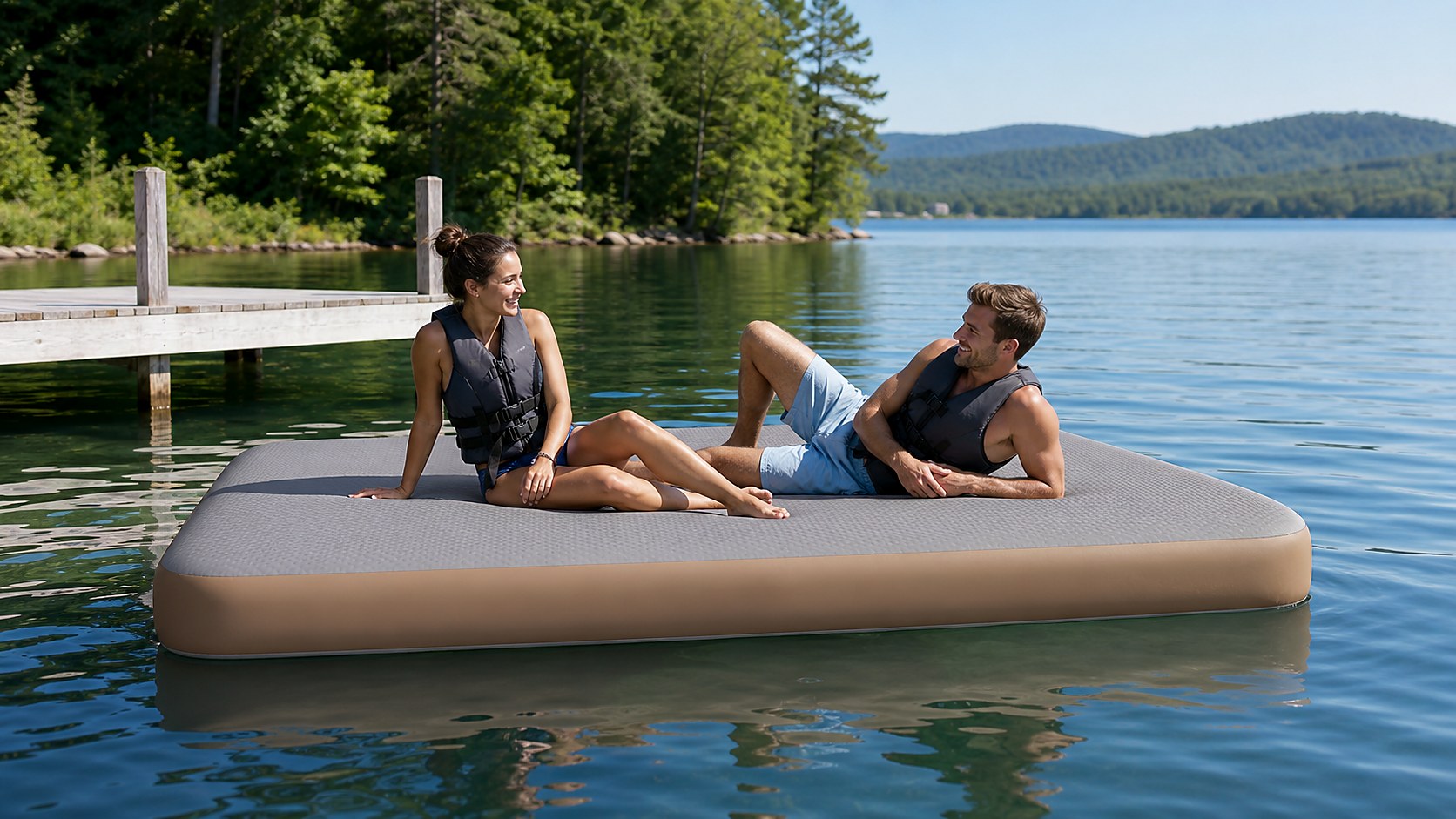
The gray and brown drop stitch inflatable mattress shown as a calm-water leisure platform near shore.
A second lifestyle view shows the same drop stitch inflatable mattress used as a broad resting platform at a bright lakeside campsite.
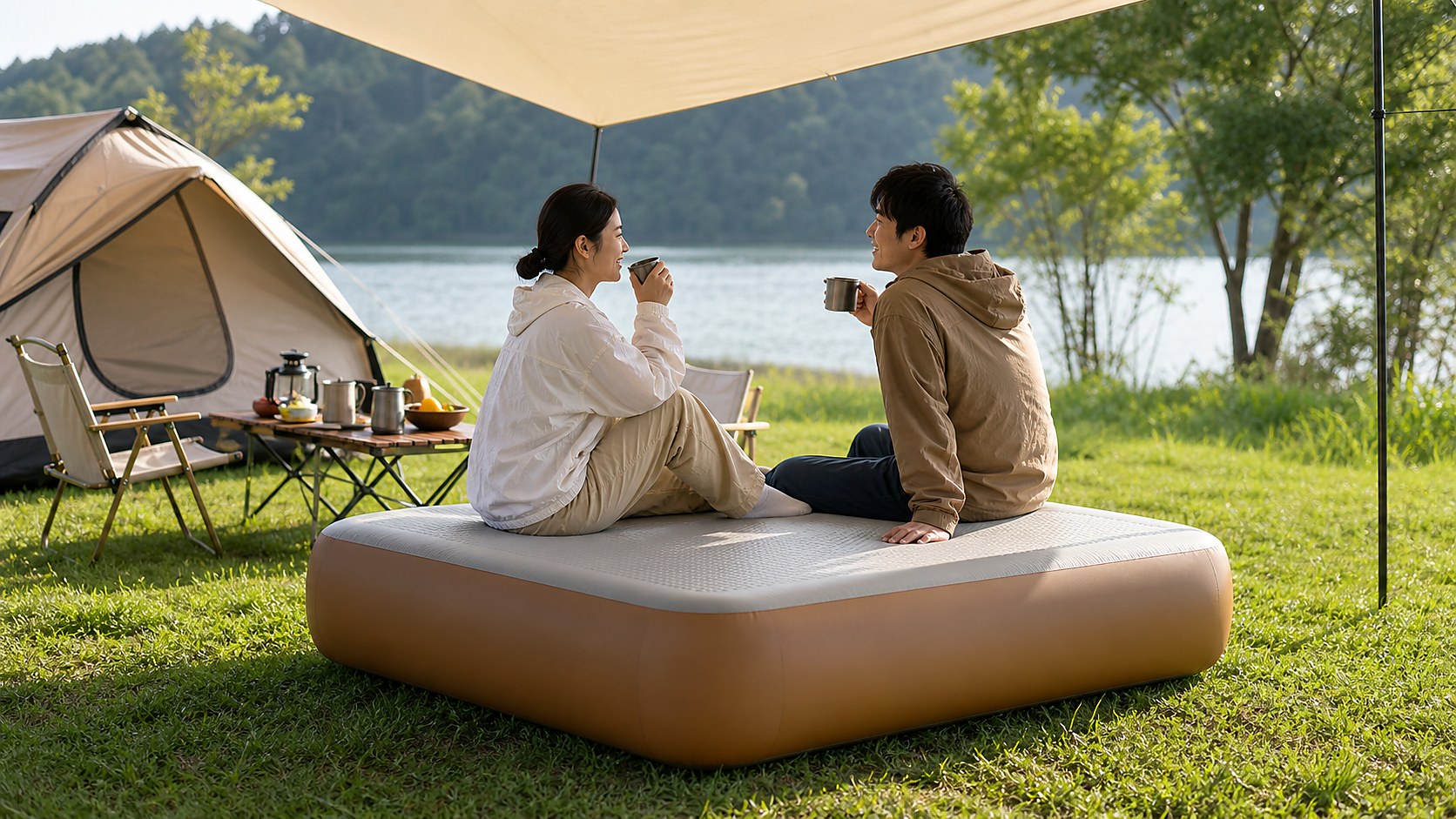
A level campsite scene emphasizes shared comfort, outdoor living and the product's dual-use positioning.
Outdoor buyers increasingly want products that earn their storage space. A piece of equipment that works for only one weekend or one setting can be difficult to justify, especially for families, campers, rental operators and retailers managing limited space. That is why the idea of a dual-use drop stitch inflatable mattress deserves attention in summer 2026.
At a campsite, the product can provide a broad, elevated surface for resting, sitting, reading or organizing gear. In calm, supervised water, a configuration specifically approved for that purpose can work as a floating leisure mat. These two uses share the same basic customer need: a portable surface that feels more stable and structured than a conventional soft air bed.
Search behavior supports content that connects those needs. People may enter Google with different phrases, including inflatable camping mattress, floating water mattress, inflatable water mat, double camping mattress or portable inflatable mattress. Google explains that Trends results are normalized by time and location and displayed on a relative scale, not as exact monthly search counts. For a manufacturer or product brand, the practical SEO opportunity is therefore to answer the overlapping questions behind those phrases instead of forcing every visitor into one label.
The Entrefly product shown here uses drop stitch fabric and a rounded rectangular format. The supplied product information shows an approximate inflated footprint of 214 x 167 cm and two height references, 20 cm and 40 cm, in white and brown versions. Final specifications, pressure, load guidance and water-use approval should always be confirmed for the exact production model.
The strongest commercial story is not simply that the mattress inflates. It is that the same basic form can support two different outdoor moments.
On land, a wide mattress can become a shared resting platform under a canopy, beside a tent or at a vehicle-based campsite. The raised surface can make it easier to sit down, change clothing, organize sleeping bags or relax away from damp grass. A 40 cm version may feel more furniture-like, while a lower 20 cm version may be easier to step onto and integrate inside a tent, subject to the tent dimensions.
On water, the same large rectangular footprint can create a social platform for sitting or reclining in calm, protected conditions. The product should remain close to shore or a suitable dock, be used with appropriate personal flotation devices and never be presented as rescue equipment. Wind, current, waves, water temperature and local rules still determine whether floating use is appropriate.
This dual-use positioning is valuable because it gives retailers more than one merchandising season and gives consumers more than one reason to buy. It can appear in camping, lake recreation, resort leisure, garden relaxation and outdoor-living collections without pretending to replace specialized boats or technical sleeping systems.
A conventional air mattress is usually formed from one or more soft air chambers. It can be comfortable, but the surface often rises, rolls or compresses as people move. Drop stitch construction is different. Thousands of internal threads connect the upper and lower fabric layers, helping the inflated product maintain a flatter shape when it is built and pressurized correctly.
For this product category, that structural behavior can create several practical benefits:
· a broad surface that feels more platform-like;
· less ballooning than a simple unsupported air chamber;
· a more defined rectangular profile;
· better support for sitting, reclining and shared use;
· a surface that can be offered in different heights without becoming a round air cushion;
· a useful base for custom colors, graphics and application-specific accessories.
Drop stitch does not make every product identical. Fabric specification, thread density, coating, lamination, sidewall construction, seam process, valve selection, pressure range and quality control all affect the result. Buyers should request a complete material and construction description rather than treating the phrase “drop stitch” as a complete performance guarantee.
Many camping mattresses focus on minimum packed size for backpacking. The illustrated product addresses a different customer: car campers, family campers, glamping sites, festivals, lakeside resorts and outdoor-living users who value usable area and comfort more than ultralight weight.
The approximate 214 x 167 cm footprint shown in the product information creates space for two adults to sit or rest, depending on the approved load. It can also work as a daytime lounge surface under a canopy. That makes the product relevant before bedtime and after breakfast, not only while users sleep.
For land use, buyers should consider:
· whether the inflated size fits inside the intended tent or canopy;
· whether the campsite surface is level and free of sharp objects;
· how the bottom is protected from stones, branches and hot ground;
· whether bedding or a fitted cover is required for comfort;
· how the valve can remain accessible after setup;
· whether the product can be carried and positioned by the expected number of users;
· how condensation, rain and morning moisture will be dried before packing.
The product should not be dragged across gravel or placed next to sparks, heaters or open flames. A groundsheet can reduce abrasion, but it does not remove the need to inspect the campsite first.
Calling a product a floating water mattress changes the questions customers ask. They want to know where it can be used, how it is controlled, how people get on and off, and what happens when wind begins to move it.
The large rectangular format offers generous leisure space, but it is not a powered watercraft and should not be described as one. A responsible water-use plan should define:
· protected water only, if that is the approved scope;
· maximum users and load distribution;
· inflation pressure for water use;
· compatible attachment or tether points, if engineered into the product;
· recommended distance from shore or dock;
· weather, wind and current limits;
· personal flotation requirements;
· adult supervision and swimming ability;
· inspection and drying procedures after use.
The American Red Cross states that inflatable toys and other recreational items are not substitutes for life jackets. That distinction should appear clearly in manuals and marketing. Users should wear an appropriate approved buoyancy aid whenever conditions or local rules require it, and non-swimmers should receive close supervision.
The product information supplied for this article shows the same approximate 214 x 167 cm footprint with 20 cm and 40 cm height references. Those two heights can serve different needs, but the final choice should follow prototype testing.
The 20 cm version may offer:
· a lower step-up height;
· easier integration into tents with limited vertical space;
· a slimmer visual profile on land;
· potentially less packed material, depending on construction;
· a lower floating profile, which may affect splash exposure and boarding.
The 40 cm version may offer:
· a more elevated, bed-like feel at a campsite;
· more separation from damp ground;
· a stronger furniture-style presentation for glamping or resorts;
· greater visible sidewall area for branding;
· different floating behavior that must be tested under realistic loads.
Height alone does not determine comfort, buoyancy, stability or safe capacity. Pressure, material stiffness, seam geometry, user position and load distribution are equally important. Brands should avoid publishing a load claim until the exact version has passed an appropriate verification program.
Customers often assume that a taller mattress is automatically more comfortable. Outdoor comfort is more complex. Surface firmness, temperature, bedding, user weight, sleeping position and ground conditions all matter.
A drop stitch surface may feel firmer and flatter than a conventional air bed. Some users will appreciate that support; others may prefer a topper, blanket or fitted cover. For camping, the product page should clarify whether the mattress includes any tested insulation value. Air volume and height do not automatically prove cold-weather insulation performance.
For warm-season leisure, the wide surface can be useful for reading, conversation, stretching or resting. For overnight use, brands should recommend suitable bedding and explain that temperature conditions may change the user experience. The most credible marketing describes the feel accurately rather than claiming universal comfort for every sleeper.
An inflatable mattress solves the storage problem only when the entire journey is manageable. Buyers should compare more than the deflated body. They need the packed dimensions, product weight, pump, repair materials, carrying bag and any protective groundsheet.
The full setup journey includes:
1. transporting the packed product to the campsite or shore;
2. unfolding it on a clean surface;
3. connecting the correct pump and valve adapter;
4. inflating gradually to the specified pressure;
5. inspecting the valve, seams and surface;
6. positioning the product without dragging it;
7. cleaning, drying, deflating and folding it after use.
For a large double mattress, brands should test whether one person can manage these steps or whether two people are recommended. Setup time should be measured with the pump actually included in the package, not an unrelated workshop compressor.
A product that moves between grass and water needs a disciplined care routine. Sand, soil, sunscreen, salt, food residue and moisture can remain on the surface or enter folds during packing.
After land use, remove loose dirt and check the underside for abrasion. After fresh-water use, rinse if necessary and dry the top, bottom, seams and valve area. After salt-water exposure, a fresh-water rinse becomes especially important. The product should be completely dry before long-term storage to reduce odor, staining and material stress.
Cleaning instructions should identify approved mild cleaners and prohibit aggressive solvents or stiff tools that could damage the coating. Storage guidance should cover temperature, sunlight, folding method, valve position and protection from rodents or sharp equipment.
A dual-use inflatable mattress is not limited to a consumer camping shelf. It can support several business models:
· outdoor and water-sports retailers seeking a cross-category summer product;
· campsites and glamping operators creating flexible lounge or sleeping areas;
· lakeside resorts offering supervised relaxation near a dock;
· rental businesses that need washable, packable equipment;
· event companies building temporary rest zones;
· private-label brands developing coordinated camping and water collections.
Each market needs a different package. A resort may prioritize easy cleaning, neutral colors and replacement parts. A retail brand may want compact packaging, clear instructions and strong shelf imagery. A rental operator may prefer visible asset numbers, reinforced wear areas and a documented inspection schedule.
The manufacturer should receive the actual operating scenario before quoting. “Outdoor mattress” is not a complete specification.
Color and graphics are important, but they should follow the functional brief. A useful customization discussion includes:
· land only, calm water only or approved dual use;
· finished length, width and height;
· target users and verified load requirement;
· top, bottom and sidewall colors;
· surface texture and optional removable cover;
· valve type and position;
· handles or attachment points only where engineered and reinforced;
· packaging, pump and repair kit;
· printed warnings, manual languages and carton marks;
· logo position and graphic file requirements.
The supplied Entrefly example demonstrates how a neutral gray top can be paired with white or warm brown sides. Custom graphics should remain readable after inflation and should not cover warnings, valves or inspection areas.
A dual-use claim creates a broader inspection responsibility. The product should be checked after each production stage and receive a full final inspection before packing.
A quality plan may include:
· incoming inspection of drop stitch fabric, sidewall material, valves and adhesive or weld components;
· dimensional checks against the approved sample;
· visual inspection of lamination, surface texture, printing and sidewall alignment;
· pressure and air-retention testing under defined conditions;
· seam and valve inspection;
· load-distribution and deformation checks on a clean land surface;
· controlled floating evaluation if water use is part of the approved design;
· accessory and packaging verification;
· final cleanliness, drying and carton inspection.
Buyers should agree on the test method, sample frequency, acceptance criteria and record format before production. A one-year warranty can support customer confidence, but it does not replace clear instructions or documented inspection.
The most persuasive product page does not need exaggerated claims. It needs specific answers.
Use photographs that show the real product dimensions and surface. State whether images are AI-assisted lifestyle composites. Explain which version is shown. Separate land-use comfort claims from water-use safety instructions. Avoid phrases such as “unsinkable,” “safe for everyone,” “all-weather” or “life-saving.” Do not imply that a recreational floating mattress replaces supervision or an approved life jacket.
Google rewards pages that satisfy a searcher’s question, but customers reward brands that set correct expectations. Clear specifications, honest images, useful setup guidance and visible quality-control information can help both SEO and conversion.
The 2026 opportunity for a drop stitch inflatable mattress is not based on novelty alone. It comes from combining a structured, generous resting surface with packable inflatable construction.
At a campsite, it can support relaxation, shared seating and sleeping arrangements appropriate to the tested configuration. On calm water, an approved version can provide a stable leisure surface when used close to shore with supervision and proper flotation equipment. For retailers and brands, that creates a product story connecting camping, lake recreation, glamping and outdoor living.
Success depends on disciplined specifications. The size, height, materials, pressure, load, accessories, water-use scope and instructions must be confirmed for the exact model. When those details are handled well, one inflatable product can serve two outdoor markets without confusing the customer.
A drop stitch inflatable mattress uses internal threads connecting the upper and lower fabric layers so the inflated product can maintain a flatter, more structured shape than a simple unsupported air chamber. Construction details and performance still vary by model.
It can be designed for land camping and calm-water leisure, but the intended uses must be confirmed for the exact production model. Water use requires appropriate supervision, conditions and personal flotation equipment. It is not a life-saving device.
The supplied product information shows an approximate footprint of 214 x 167 cm with 20 cm and 40 cm height options. Final production dimensions and tolerances should be confirmed on the approved specification sheet.
The 20 cm version may offer lower access and easier tent integration, while the 40 cm version can provide a more elevated, bed-like presentation. Comfort, stability and capacity depend on the complete construction and test results, not height alone.
No. Recreational inflatable products are not substitutes for approved life jackets or buoyancy aids. Follow local rules, supervise users and use the product only in conditions covered by its instructions.
Yes. We can customize the size, height, color, shape and graphics according to customer requirements. Valve position, surface details, reinforced attachment points, accessories and packaging can also be developed according to the approved specification and intended use.
We are one of the leading manufacturers in the inflatable-products industry and use advanced production technology. We strictly control product quality and provide a one-year warranty, subject to the agreed warranty terms and correct use.
We pay close attention to quality control. Products are inspected after each production process, and we conduct a full final inspection before packing. Test items and acceptance standards can be agreed with the customer before production.
Address 732 households, No. 55 Feixian Road, Shinan District, Qingdao City, Shandong Province
E-mail zachary@wassersporte.com

