


The tent market is no longer divided only by capacity, season and price. In 2026, more buyers are also asking how the structure goes up, how much useful space it creates and how easily a family can repeat the setup after a long drive. That is where the inflatable tent has developed a clear identity.
Instead of connecting a bundle of rigid poles, an air tent uses inflatable beams or columns to support the fabric shell. The idea is simple, but the purchasing decision is not. A successful inflatable camping tent still depends on its floor plan, fabric, window design, valves, anchoring system, pump, repair plan and quality control. It must also be used with the same respect for wind, lightning, fire and campsite hazards as any other temporary shelter.
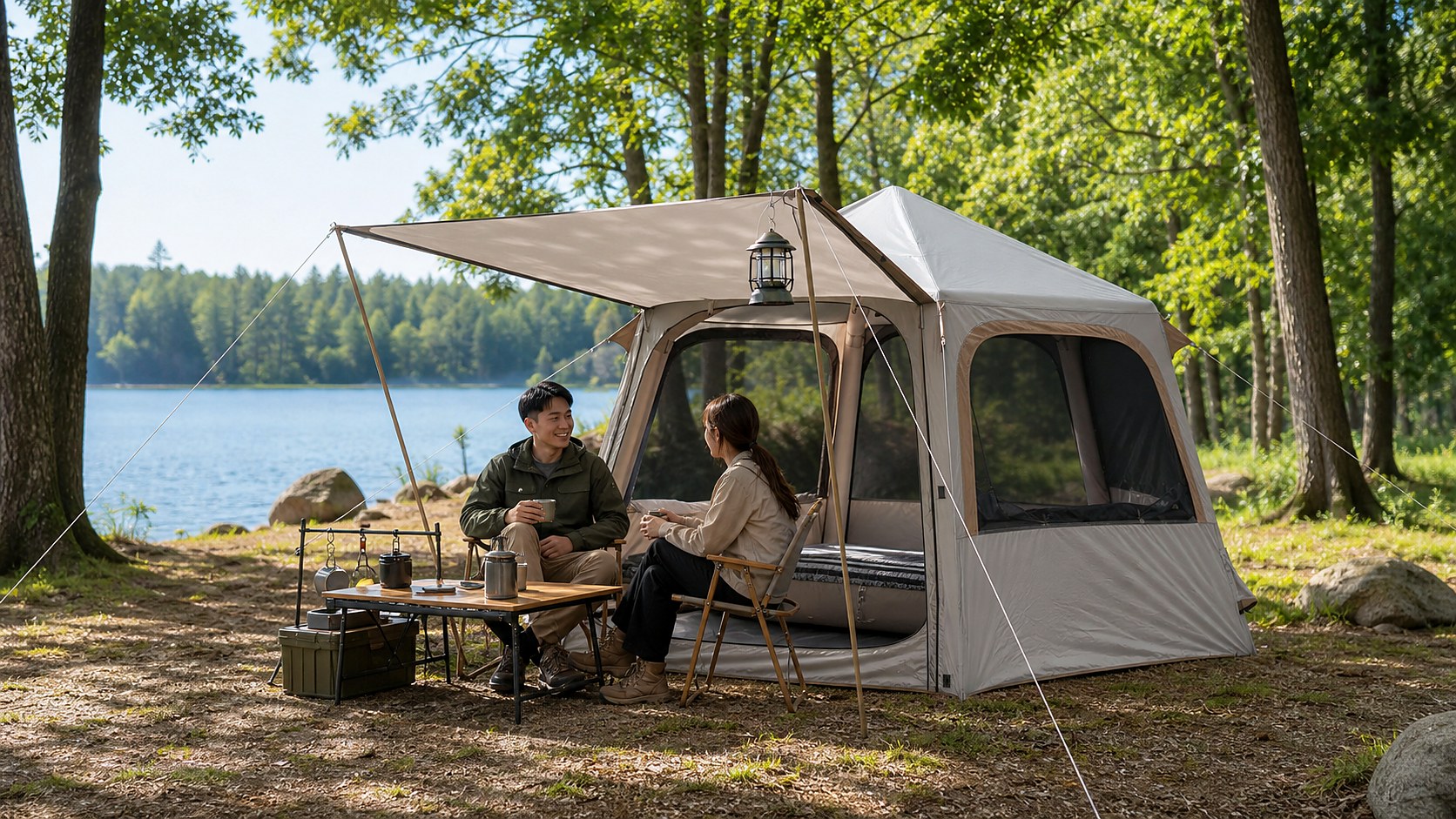
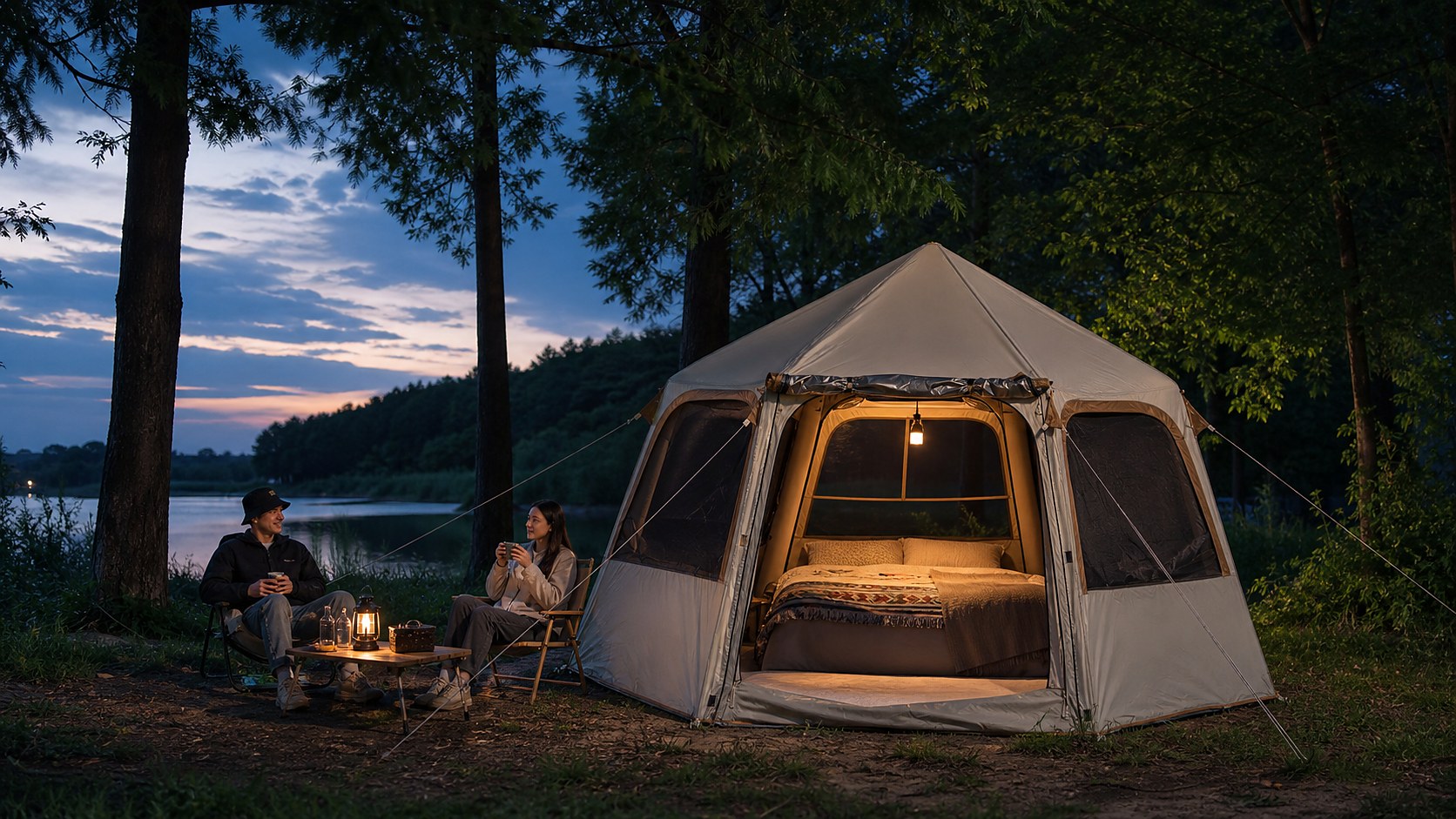
The hexagonal model shown in this article illustrates why the category is attracting attention. Its high pointed roof, broad mesh panels and open-sided geometry create a cabin-like feeling, while the inflatable columns replace much of the traditional pole framework. A front panel can also form an awning when supported and anchored correctly. For family camping, glamping, rental fleets and private-label brands, that combination creates a new product conversation: not simply “Is it inflatable?” but “Does the entire system make camping easier and more useful?”
Google Trends is a useful way to observe relative search interest, but Google explains that its data is normalized by location and time and scaled from 0 to 100. It is not a report of exact monthly search volume. For that reason, the strongest SEO strategy is to answer connected customer questions around inflatable tent, air beam tent, family inflatable tent, setup, space, ventilation, weather preparation and customization.
A conventional pole tent relies on aluminum, fiberglass, steel or composite poles to create its shape. An inflatable model replaces some or most of those rigid members with sealed air beams. The beams become firm when inflated to the specified pressure and support the flysheet and interior structure.
This change affects the complete user journey. There are fewer long poles to sort, connect or thread through sleeves. The customer unfolds the tent, identifies the valves, connects the approved pump and raises the structure in a controlled sequence. Deflation reverses that process, but good packing still requires the fabric to be clean, dry and folded without trapping accessories in the wrong place.
The absence of a traditional frame does not mean an air tent can be placed anywhere without anchors. Guylines, stakes, tension points and site selection remain essential. The air structure creates the shape; the anchoring system helps the whole shelter manage movement and changing weather.
“Fast setup” is one of the most common search intentions behind the phrase blow up tent. It is also one of the easiest claims to oversimplify. A realistic setup time depends on tent size, pump output, valve layout, ground conditions, wind, user experience and the number of people involved.
A buyer should therefore evaluate the complete sequence:
1. Remove the packed tent and footprint from the transport bag.
2. Select level ground and remove sharp branches, stones and debris.
3. Orient the door and awning before anchoring the corners lightly.
4. Locate every inflation valve and confirm that it is closed correctly.
5. Inflate the air structure in the manufacturer’s recommended order and pressure range.
6. Adjust the base, stakes and guylines so the roof and walls sit evenly.
7. Install the awning poles or optional accessories only after the main body is stable.
For a retailer or importer, the test should use the pump actually included in the package. A demonstration performed with a workshop compressor does not represent the customer experience. Setup videos should show ordinary ground, the real bag and the real accessories. That creates better expectations and fewer support questions after purchase.
The illustrated hexagonal inflatable tent is different from a narrow tunnel tent. Multiple angled sides create a central gathering area, while the high roof helps the interior feel open. Broad windows distribute light around the perimeter rather than concentrating it at one end.
That geometry can support several arrangements: a double sleeping area, a family lounge, a table-and-chair zone or a flexible glamping room. The product photographs show that bedding can fit inside and that the front can open toward a canopy-style outdoor living area. Final capacity still depends on the actual dimensions and approved floor plan, so brands should not infer a person rating from appearance alone.
When comparing models, buyers should ask for usable floor dimensions, maximum internal height, door dimensions and the footprint required by guylines. “Fits four” and “fits a double bed” are not complete specifications. A floor plan drawing with real measurements is more helpful than a generic capacity icon.
Large mesh panels are visually attractive, but their real value is ventilation and insect management. Warm bodies, wet clothing and temperature changes can produce condensation inside any tent. Cross-ventilation helps manage that moisture and makes a family shelter more comfortable during warm-weather use.
The supplied model uses large dark mesh sections around several sides. Buyers should inspect:
· how many panels can open independently;
· whether the mesh can be covered from inside, outside or both;
· whether rain can enter when a cover is partly open;
· the zipper path and whether it can be operated without excessive tension;
· the size and type of mesh appropriate for the target market;
· whether upper vents remain functional when the main windows are closed;
· how the door is stored when rolled up.
Ventilation claims should be linked to the exact configuration. A large window area is useful, but airflow also depends on wind direction, vent placement, internal layout and whether the rain covers are open.
The front panel on this design can create a shaded awning when raised on poles and secured with guylines. That transition is commercially important because families increasingly view a tent as part of an outdoor living system, not only as a sleeping shell.
Under an awning, users can place chairs, remove shoes, prepare a dry entry area or sit out of direct sun. It also creates a strong lifestyle image for camping retailers and glamping operators. However, the awning is exposed to wind and water loading. It should be lowered or adjusted when conditions change, and it must never be marketed as a permanent roof.
Product pages should state whether the awning poles, stakes and lines are included. If they are optional, photographs should not imply that they arrive in every package. Clear accessory lists are a small detail that can prevent large customer-service problems.
Neither structure is automatically best for every user. The right choice depends on the trip, transport method, expected weather, budget and maintenance habits.
An air beam tent may appeal to customers who want:
· fewer long poles to organize;
· a more intuitive raising process;
· flexible beams that can recover from some movement;
· generous cabin-style geometry;
· a distinctive glamping or family-camping presentation.
A traditional pole tent may appeal to customers who want:
· familiar field repair methods;
· potentially lower weight in some technical designs;
· separate replaceable poles;
· a wide selection of proven shapes and price levels;
· no need to manage inflation pressure.
The fairest comparison uses complete systems of similar size. Packed weight, bag dimensions, floor area, peak height, setup accessories, pump weight, anchoring components and repair materials all belong in the calculation. Comparing only the tent body can produce a misleading result.
An inflatable tent is temporary outdoor shelter, not a substitute for a safe building or vehicle during dangerous weather. Buyers should be cautious of vague “all-weather” claims unless a specific test method, configuration and limit are documented.
The U.S. National Park Service recommends selecting level ground that is not a low point, removing sharp debris and avoiding hazards such as dead branches, flooding, wind and lightning. It also advises keeping the tent a safe distance from cooking and fire areas. These recommendations apply regardless of whether the frame uses air beams or poles.
The U.S. National Weather Service is especially clear about thunderstorms: a tent is not safe shelter from lightning. Campers should monitor forecasts, have an evacuation plan and move to a substantial building or hard-topped vehicle when thunder or lightning threatens.
For normal use, the tent should be fully staked and guyed according to the manual. Operators should check tension as temperature and weather change. If a supplier states a wind resistance or waterproof rating, the buyer should request the test standard, sample configuration and pass criteria behind that claim.
Color is only the visible part of the specification. The shell fabric, coating, floor, mesh, inflatable beam material, webbing, zippers, windows, valves and seam methods work together.
For the outer fabric, buyers may compare fiber type, fabric weight, coating system, water-resistance test method, UV exposure plan and colorfastness. For the floor, abrasion and moisture protection are major concerns. For the inflatable structure, the buyer needs the tube or beam construction, approved pressure range, valve specification and access method for inspection or replacement.
Window and door materials require their own review. Mesh should be evaluated for visibility, airflow, tear resistance and insect exclusion. Clear window panels, if offered, must remain flexible in the target temperature range. Zippers should travel smoothly around curves without pulling the surrounding fabric out of alignment.
Material names alone do not prove durability. The approved sample, bill of materials, test plan and workmanship standard should all match before production begins.
The pump is not a minor accessory. It determines how easily the air structure reaches the intended pressure and how confidently a new customer can operate the tent.
Useful specification questions include:
· Is the included pump manual or electric?
· Does it have the correct adapter for every valve?
· Is a pressure gauge included or built in?
· Can the pump be used for controlled deflation?
· How are valves labeled in the setup sequence?
· Are caps, seals and adapters available as spare parts?
· What instructions prevent overinflation?
Valve placement also matters. A valve should be reachable without moving furniture or crawling into an awkward corner. It should not sit where shoes, chairs or packed luggage repeatedly strike it. If the model uses separate beams, the manual should clearly identify each chamber and explain what to do if one loses pressure.
The high central roof and broad floor of a family inflatable tent can make the interior feel more like a temporary room. That does not mean every arrangement will work equally well.
Users need space to enter, store bags, move around bedding and reach ventilation panels. Retailers can help by publishing a scaled floor diagram showing common layouts. A double mattress may fit, but the remaining aisle, door clearance and wall slope still determine whether the arrangement is practical.
For daytime use, the same space may hold a compact table and chairs. For overnight use, ventilation and fabric clearance become more important. Heaters, stoves and open flames should not be used inside unless a product has a specific approved system and instructions; a generic camping tent should never be assumed to support them.
An air tent can remove poles from the setup process, but it still needs disciplined aftercare. Packing damp fabric can create odor, mildew risk, staining and coating stress. Sand and soil trapped in folds can abrade the material during transport.
After use, the operator should remove loose dirt, wipe the floor, dry the shell and check the beam sleeves, valves, corners and guy points. Deflation should follow the manual so air escapes without forcing fabric through a small fold. Valves should be protected before the tent is rolled or folded.
The transport bag must fit the real packed product without extreme compression. Buyers should request the packed dimensions and total package weight, including pump, stakes, poles, repair materials and instructions. Rental businesses may also need a drying rack, inspection log and separate storage for wet returns.
The same basic inflatable camping tent can serve several markets, but the package should change with the customer.
For family retail, buyers may prioritize simple instructions, a complete accessory kit, window privacy and manageable transport. For glamping, appearance, cleanable surfaces, interior height and replacement parts may matter more. Rental operators need asset identification, repeatable inspection, fast drying and clear damage criteria. Event companies may want coordinated colors and modular site layouts.
A manufacturer should receive the operating scenario before quoting. Frequency of use, climate, transport method, cleaning routine, target lifespan and local regulations can affect material and accessory choices. “One tent for every market” is rarely the best specification.
A custom inflatable tent can carry private-label colors, logos and packaging, but graphic design should come after the structural brief.
The buyer should define:
· target market and intended season;
· finished floor dimensions and peak height;
· door, window and ventilation layout;
· fabric, coating and floor requirements;
· inflatable beam and valve system;
· awning configuration and included poles;
· pump type, gauge and adapters;
· stakes, guylines, repair materials and carry bag;
· warning labels, manual languages and carton marks;
· logo artwork, color references and print positions.
The supplied hexagonal design offers strong visual panels for branding, but logos should not cover ventilation, repair access, warning labels or high-wear fold lines. Custom colors should be reviewed on inflated samples because lighting and fabric tension can change their appearance.
An experienced inflatable tent manufacturer should inspect more than the final silhouette. Quality is created at each process and verified again before packing.
A practical quality plan may include:
· incoming inspection of fabric, mesh, zippers, webbing, valves and air-beam materials;
· template and dimensional checks against the approved sample;
· seam, stitching, welding or bonding inspection as applicable;
· air-retention testing under defined pressure, time and temperature conditions;
· valve operation and cap-seal checks;
· complete inflation and visual alignment inspection;
· door, window, vent and zipper function checks;
· stake-loop, guy-point and awning attachment inspection;
· accessory, manual, label and carton verification;
· final cleanliness and dry-packing confirmation.
Buyers should agree on test methods, sampling frequency, acceptance criteria and record format before mass production. A warranty supports confidence, but it does not replace a documented inspection process.
SEO works best when the page genuinely answers the searcher. A useful product page should show the tent closed, open, from several sides, with the awning, without the awning and with a realistic interior layout. It should include a floor plan and a complete package list.
Important facts include finished and packed dimensions, total package weight, fabric and coating, floor material, approved pressure, valve type, pump, included accessories, color options, setup guidance, maintenance and warranty. Any weather or capacity claim should be tied to a defined test or approved specification.
Lifestyle images can help customers imagine the experience, but they must remain honest. If an image is an AI-assisted composite based on the real product, disclose that fact and confirm that the production item is represented accurately. Good imagery attracts attention; precise specifications convert that attention into qualified inquiries.
The 2026 opportunity for the inflatable tent comes from a broader shift in camping expectations. Families want a comfortable temporary room, retailers want a product story that is easy to demonstrate, and outdoor businesses want flexible shelters that can be packed between seasons.
Air beams can simplify part of the setup and support spacious shapes such as the illustrated hexagonal model. Large mesh panels, a high roof and a convertible front awning can make the shelter feel open and social. Yet the real value depends on the complete system: materials, pressure, valves, ventilation, anchoring, weather planning, accessories, instructions and quality control.
For brands and importers, the best next step is not to ask for a generic “air tent price.” It is to send a clear use case and specification. When the product is engineered, tested and communicated responsibly, an air tent becomes more than a novelty. It becomes a credible family-camping, glamping or rental solution with a strong search story and a practical reason to exist.
An inflatable tent uses pressurized air beams or columns to support the fabric shell instead of relying entirely on traditional rigid poles. The exact beam layout, pressure, valves and repair access vary by model.
It can reduce pole sorting and assembly, but total setup depends on size, pump, valve layout, anchoring, ground and user experience. Compare complete demonstrations made with the pump and accessories included in the retail package.
The tent must be fully staked and guyed within the limits defined for the exact model. A tent is not safe shelter from lightning. Monitor forecasts and move to a substantial building or hard-topped vehicle when thunder or lightning threatens.
Yes. We can manufacture according to customer requirements, including size, color, shape, window and door layout, graphics, accessories, packaging and branding. Structural changes must be reviewed and confirmed through drawings, samples and testing before mass production.
We are an experienced manufacturer in the inflatable-products industry with advanced production processes. We control quality throughout production, provide full inspection before packing and can offer a one-year warranty subject to the agreed product and order terms.
We pay close attention to quality control. Materials and components are checked, the product is inspected after key production processes, and each finished tent receives a full inspection before packing. Test methods and acceptance criteria can be confirmed with the buyer before production.
Please provide the intended use, target market, dimensions, material or performance requirements, door and window layout, air-beam system, color, artwork, accessory list, quantity, packaging and any required tests or certifications.
A complete package may include the tent body, compatible pump and adapters, stakes, guylines, optional awning poles, carry bag, repair materials and instructions. The final included list must be confirmed for the exact order.
Address 732 households, No. 55 Feixian Road, Shinan District, Qingdao City, Shandong Province
E-mail zachary@wassersporte.com

